A child can enter at three and leave at nineteen having never changed schools, never changed method, and never once been taught that learning and doing are separate activities. That continuity is the whole reason the Trust exists.
ELC, TLC School, CFAL and the CFAL Research Centre each have their own campus, their own staff and, in two cases, their own website. Parents usually meet one of them and never learn the others exist.
They are not a group of businesses sharing an office. They run on a single conviction, held since 2004: that people learn what they touch, build, argue about and get wrong in front of someone who knows better. Everything else — the Montessori floor, the Olympiad pathways, the laboratories, the research centre — is that one idea applied at different ages.
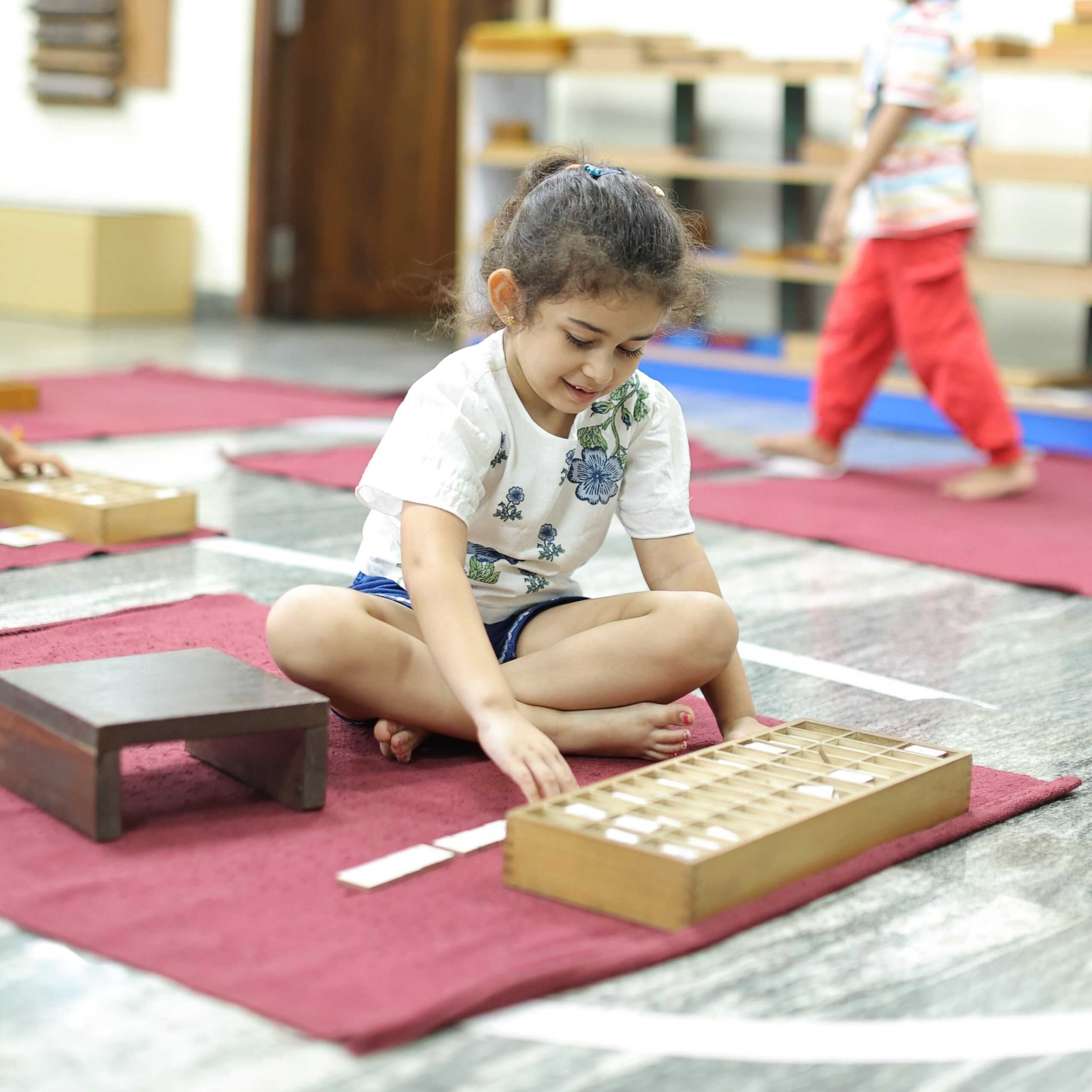
A child at work on the Montessori floor with materials, unposed, adult out of frame.
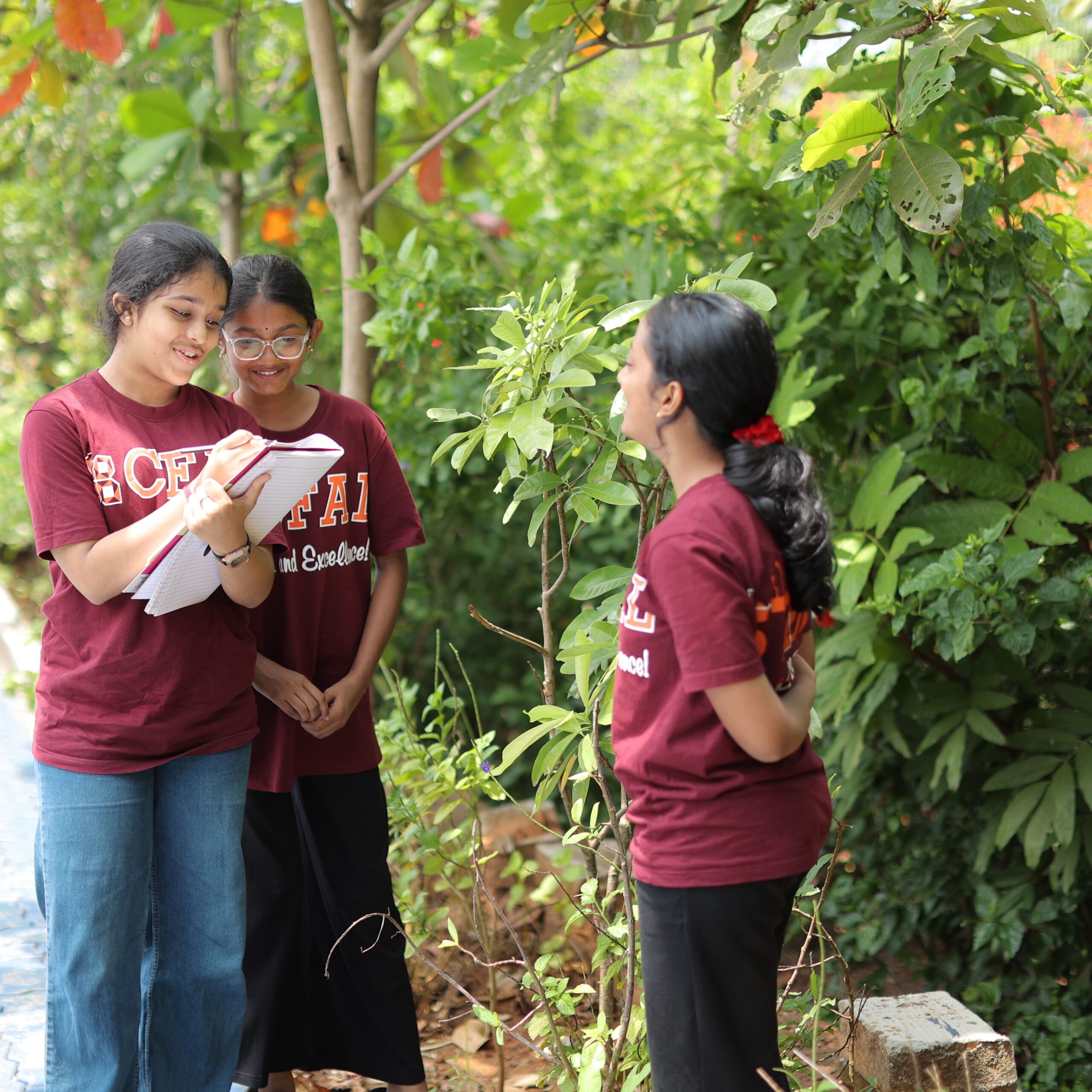
Grade 8–10 students mid-experiment or in the makerspace, hands visible, mess allowed.
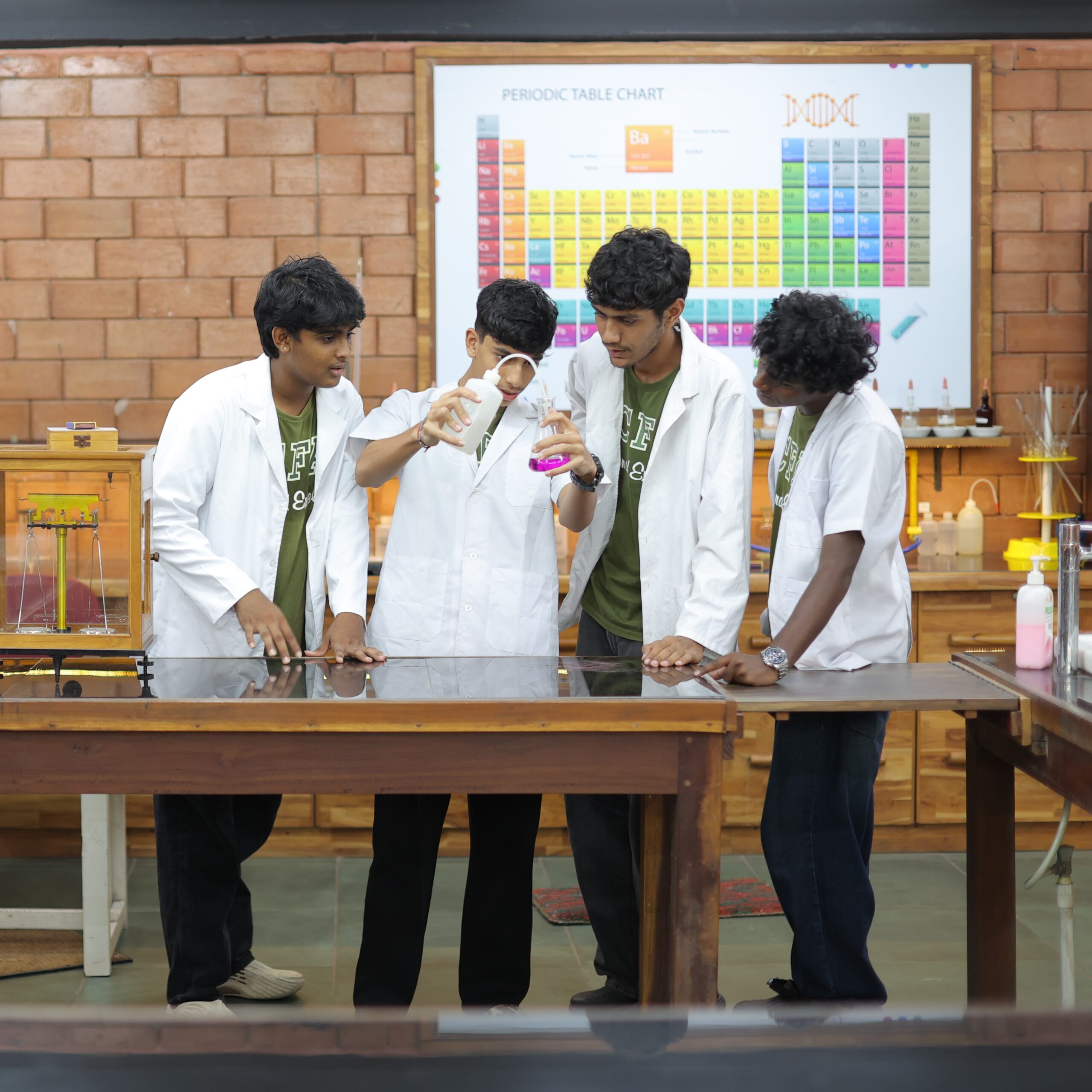
A senior student in the laboratory, or with a Research Centre scientist.
Montessori, with mixed-age groups that few schools here run. Children work with materials rather than worksheets, and older children teach younger ones. Nothing is abstract yet because nothing needs to be.
The Montessori foundation carries forward and practitioners come in from outside — people who do the thing, not only people who teach it. Learning stays tied to making and observing.
Demand rises sharply from Grade 6. Interests get somewhere to go: Olympiad pathways in physics, chemistry, biology and mathematics, a makerspace, an AI track. A student who finds their subject here has four years of momentum before it matters.
PU and Cambridge alongside JEE, NEET and KCET preparation, in laboratories, on a campus where research is happening in the next building. Students meet working scientists at the age when that decides a career.
For students aiming at universities abroad or at scholarships their families could not otherwise fund. They apply properly, keep their sciences current, and if the first attempt doesn't land they spend the year going at JEE Advanced seriously — instead of joining a college they didn't choose to avoid losing twelve months.
These are the commitments a child meets at three and still meets at eighteen. They are what makes the Trust a single institution rather than a shared logo.
The Trust is not a merger. Each institution has its own leadership, its own admissions and its own reputation to hold up, and two of them run their own sites where the practical detail lives.
Montessori for ages three to six, and a teacher training centre with a national reputation of its own.
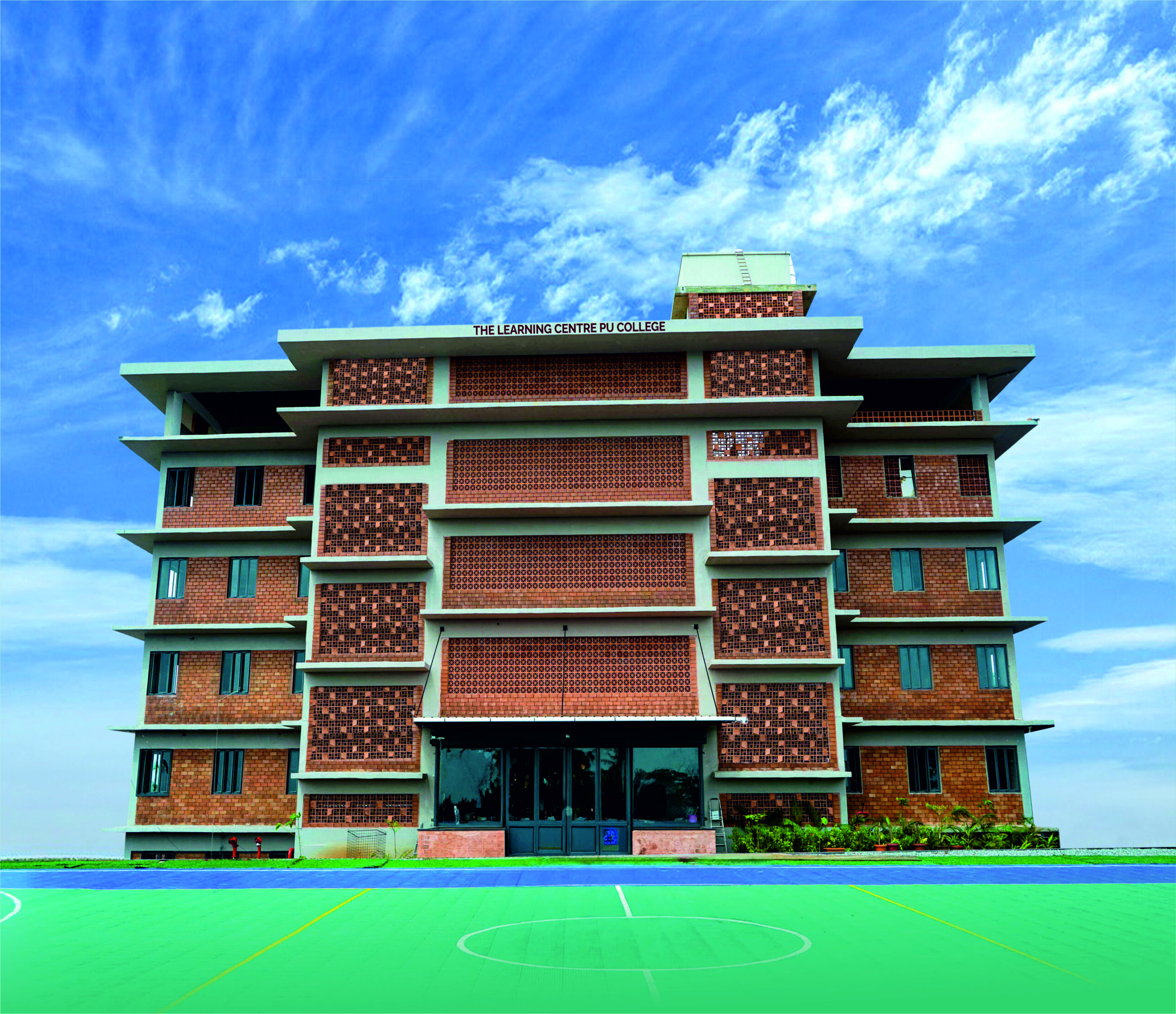
Cambridge IGCSE and the Karnataka PU stream, on the Kavoor and Kottara Cross campuses.
STEM from Grade 7 to 12, Olympiad pathways, and preparation for JEE, NEET and KCET.
Six researchers working on urban ecology, environmental monitoring, sustainability and cognition.
Because the work only pays off over a horizon no business plan tolerates. A cognition study that follows students for a decade, a tree database that becomes useful in its fifteenth year, a teacher trained free of charge who improves a government school for the rest of her career — none of these return anything to a quarterly account.
A Trust can hold them. It can also outlast the people who started it, which is the point: the method has to survive its founders or it was never a method, only a personality.
Questions about admissions or the Trust: [email protected], +91 99005 20233.