Every institution says its students are curious. The test of whether a school means it is what happens in the years before the examinations start to count.
A child who becomes interested in something at twelve usually has nowhere to take it. School moves at the pace of the syllabus, and by the time the subject turns serious the interest has cooled.
From Grade 6 onward there are pathways running alongside the ordinary curriculum, open to students who want them. They are not enrichment. They are where most of our eventual results actually begin.
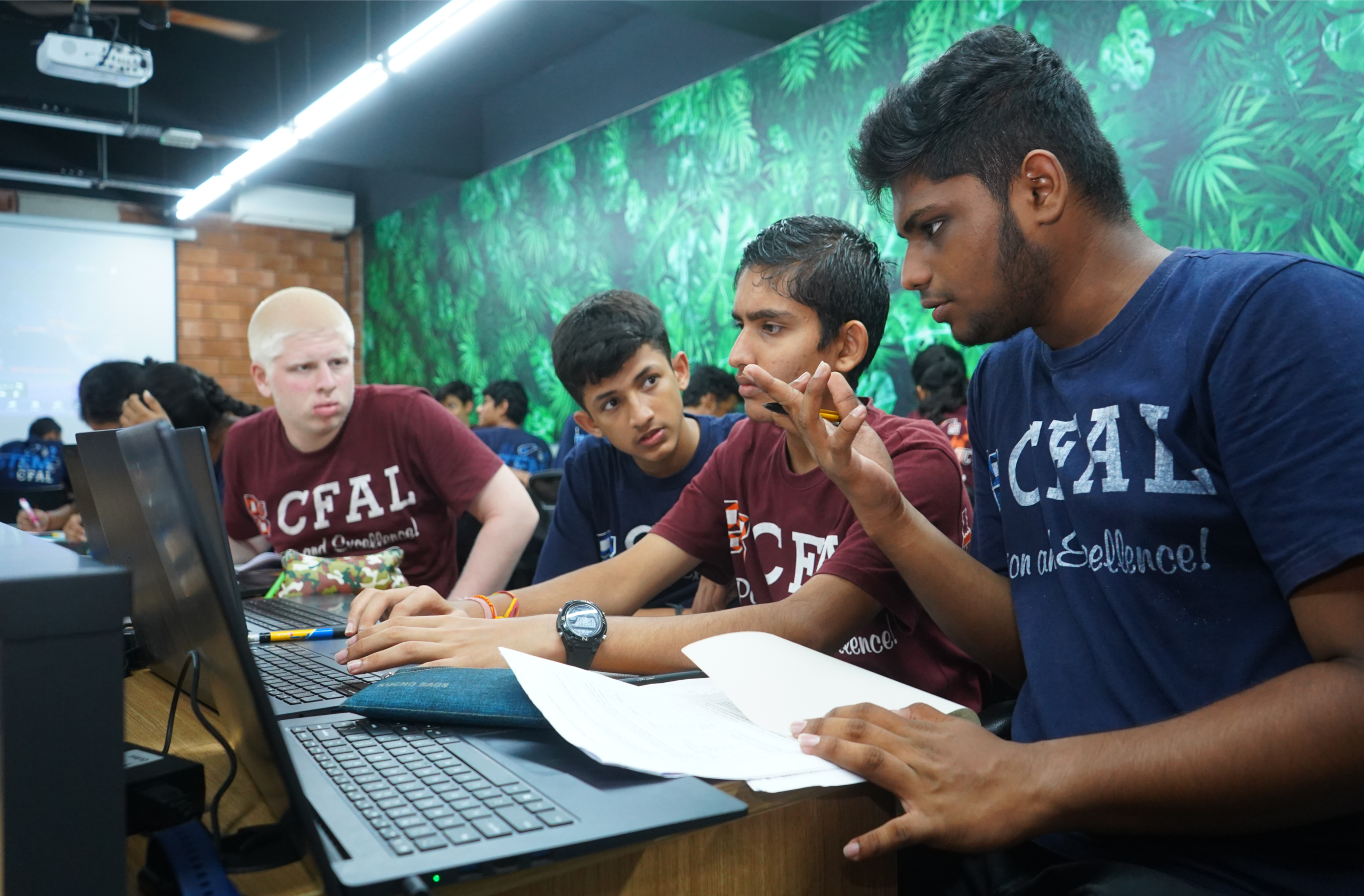
Problem sets and laboratory work well beyond board level, taken at the student's pace.
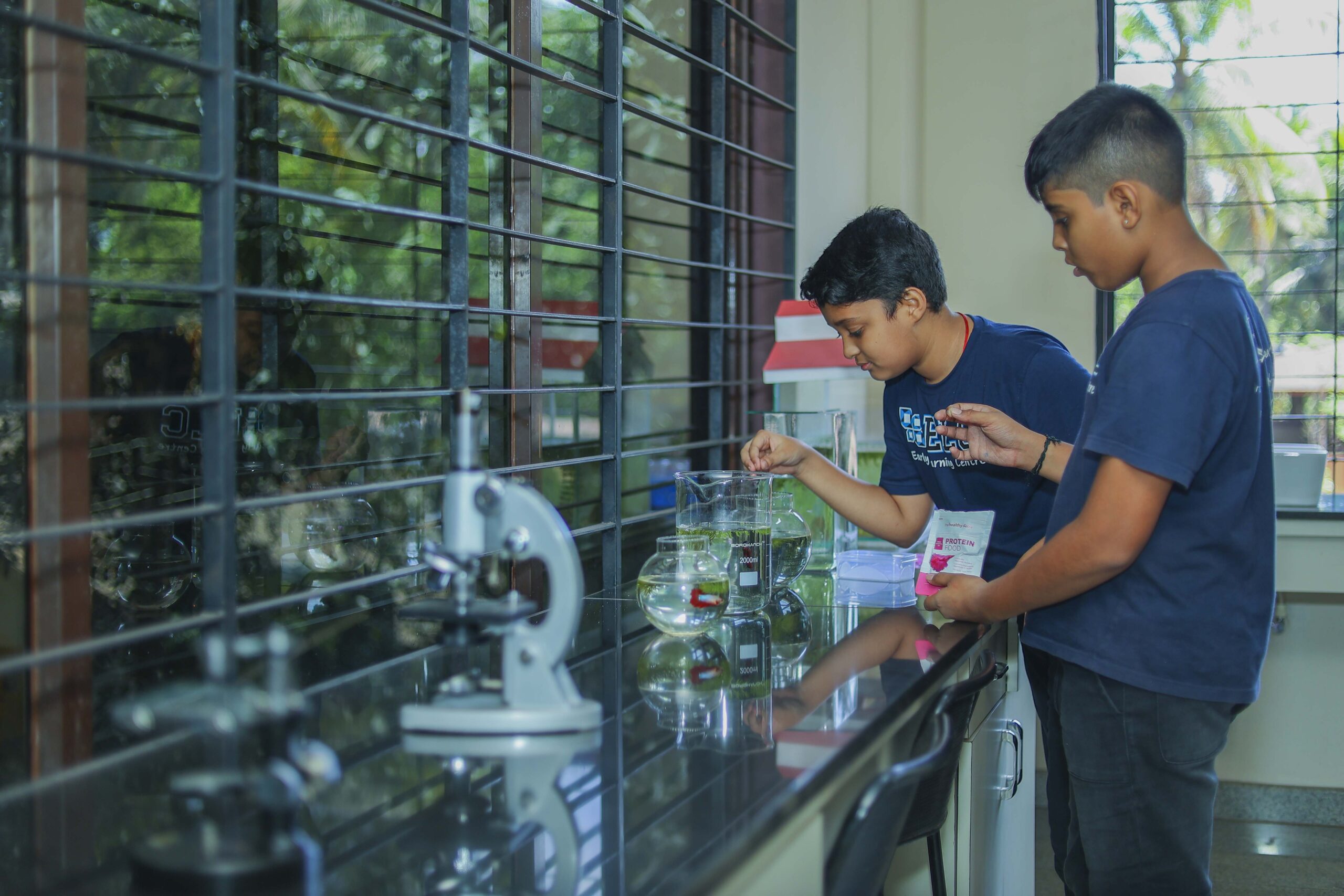
Field and laboratory work, with the Research Centre's ecologists and botanists on the same campus.
Olympiad training, and the monthly Ramanujan Contest open to students from any school.
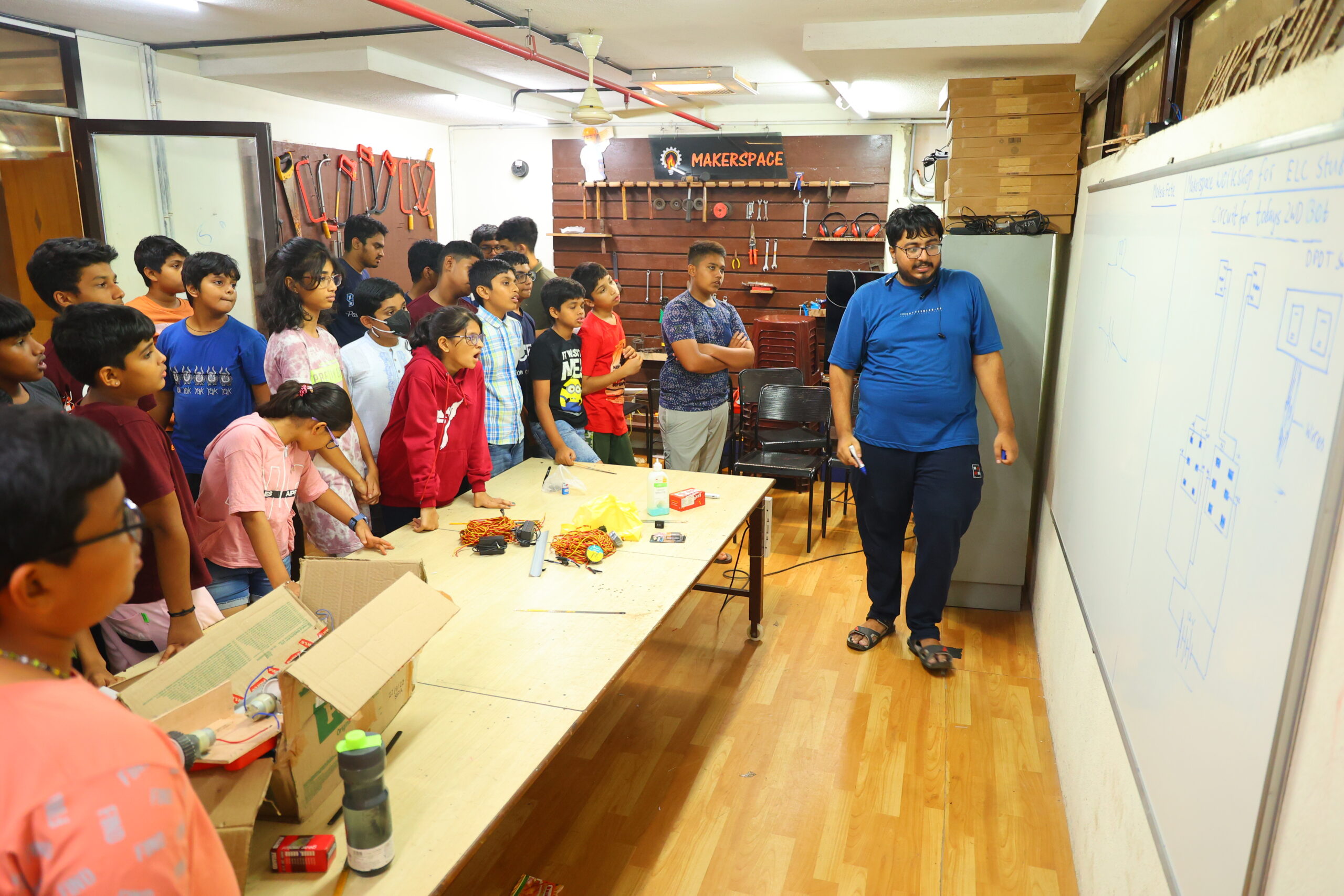
Building things that work, and finding out why they don't.
Olympiad-level work in a field most schools have not started teaching.
Physics here follows the Nuffield approach: the student runs the experiment first and derives the principle from what happened, rather than being told the principle and then confirming it in a laboratory period designed not to fail.
It is slower. It is also the difference between a student who can reproduce a result and a student who trusts a result they obtained themselves — which is the disposition that survives an engineering degree.
These are the ones that come up in every admission conversation. Here are our honest answers rather than our comfortable ones.
Partly, and it would be dishonest to pretend otherwise — there is an entrance test. But the test is a readiness check, not a talent hunt. Two years is not long enough to take a student from nothing to a competitive engineering or medical entrance, so we need to know a student can carry the pace.
The more important part happens earlier. The pathways take ordinary students who are interested in science and spend four years making them capable, before any selection happens at all. Most of the students who do well at eighteen were not exceptional at twelve. They were interested at twelve, and something was there to catch it.
Because those institutes recruit the strongest students in the country, concentrate them in one city, and report what those students go on to do. The results are real; the selection did most of the work.
Read our list of names. They are local names, with local parents, children who reached the same institutions while living at home. We think that is the harder achievement, and a better childhood.
No, and the distinction matters. We do not try untested ideas on students. We take practices already established elsewhere, put them in place here, and then check whether they are working for these students in this context.
Most schools skip the checking. If the data says a method is not helping, the method changes — that year, not after a decade of assuming.
It is the opposite of one. Some students are aiming at universities abroad, or at scholarships without which those universities are out of reach. Those applications take time and cannot be done properly alongside board examinations.
In the thirteenth year a student applies seriously, keeps physics, chemistry, mathematics and biology current, and sits JEE. If the first attempt doesn't land, the year is spent going at JEE Advanced properly — rather than enrolling in a college nobody chose simply to avoid the appearance of losing twelve months.
Stated against the national picture, because a percentage on its own tells a parent nothing.
Alumni are at the IITs, IISc, CMI and ISI, and at Harvard, ETH Zurich, the University of Chicago and Berkeley. Olympiad students have represented India internationally in mathematics and astronomy.
The Research Centre's cognition programme studies our own classrooms: which practices improve learning here, which make no measurable difference, and which quietly cost students time. The student coaching app records what was taught, practised and scored, which is what makes a study lasting decades rather than semesters possible at all.
If a method we use turns out not to work, that finding gets published. A school that only reports its successes is advertising, and we would rather be a school that can be corrected.
Admissions and visits: [email protected] · +91 99005 20233.