Some children arrive from our own Montessori years. Most come from elsewhere. The school is built so that both start well, and so that neither is treated as the standard case.
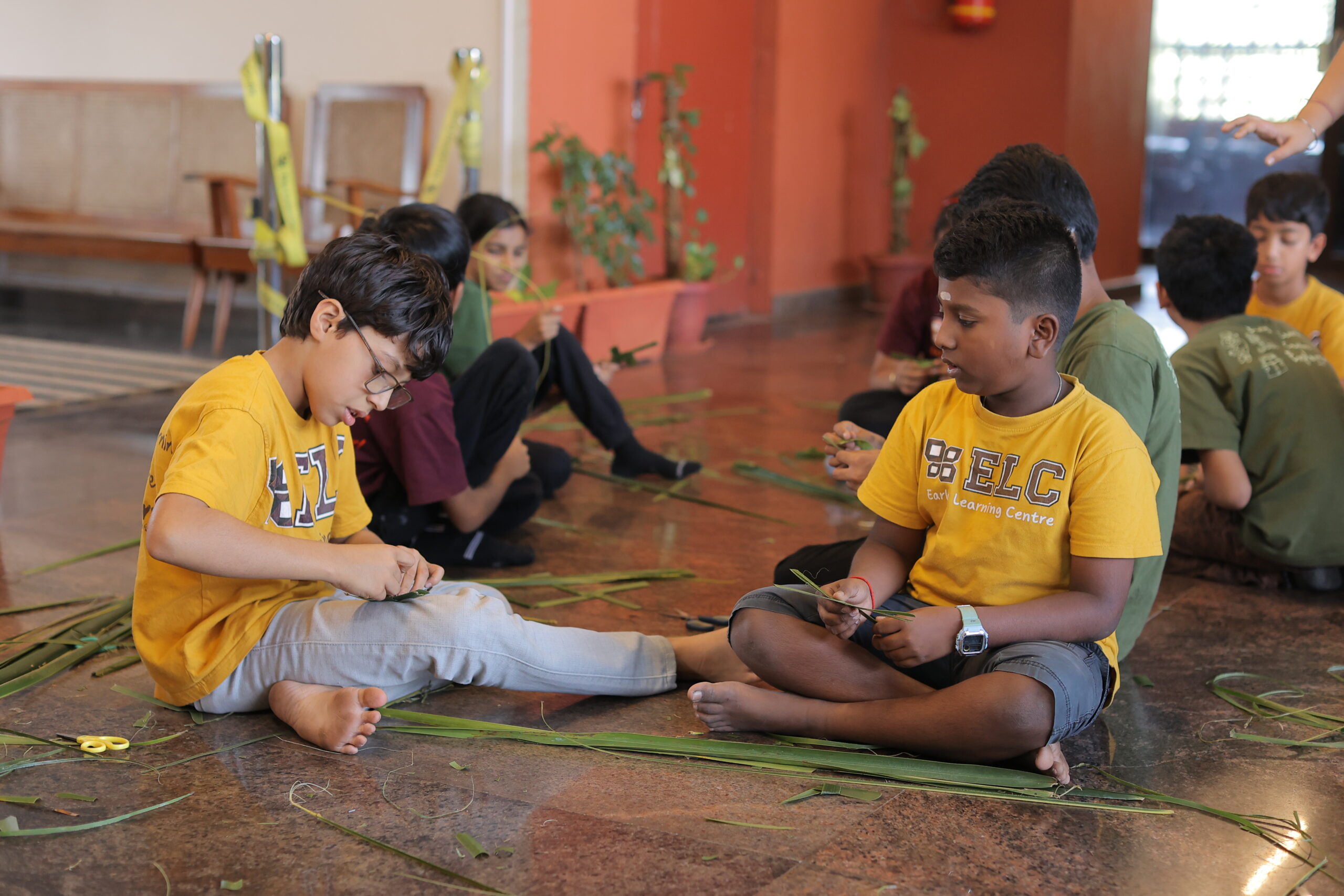
Arrange a visit How the whole path worksChildren moving up from ELC already know how to choose work, stay with it and check it themselves. The transition is a continuation rather than a change of school.
It is not automatic. Admission to Grade 1 is a separate decision, made by you, and children from ELC go to other good schools every year.
Most of our Grade 1 children do. They arrive from conventional kindergartens with a different set of habits, and the first term is built around that — more structure at the start, loosening as independence develops.
Within a year, teachers cannot reliably tell which children came from where. We have checked, because we would rather know than assume.
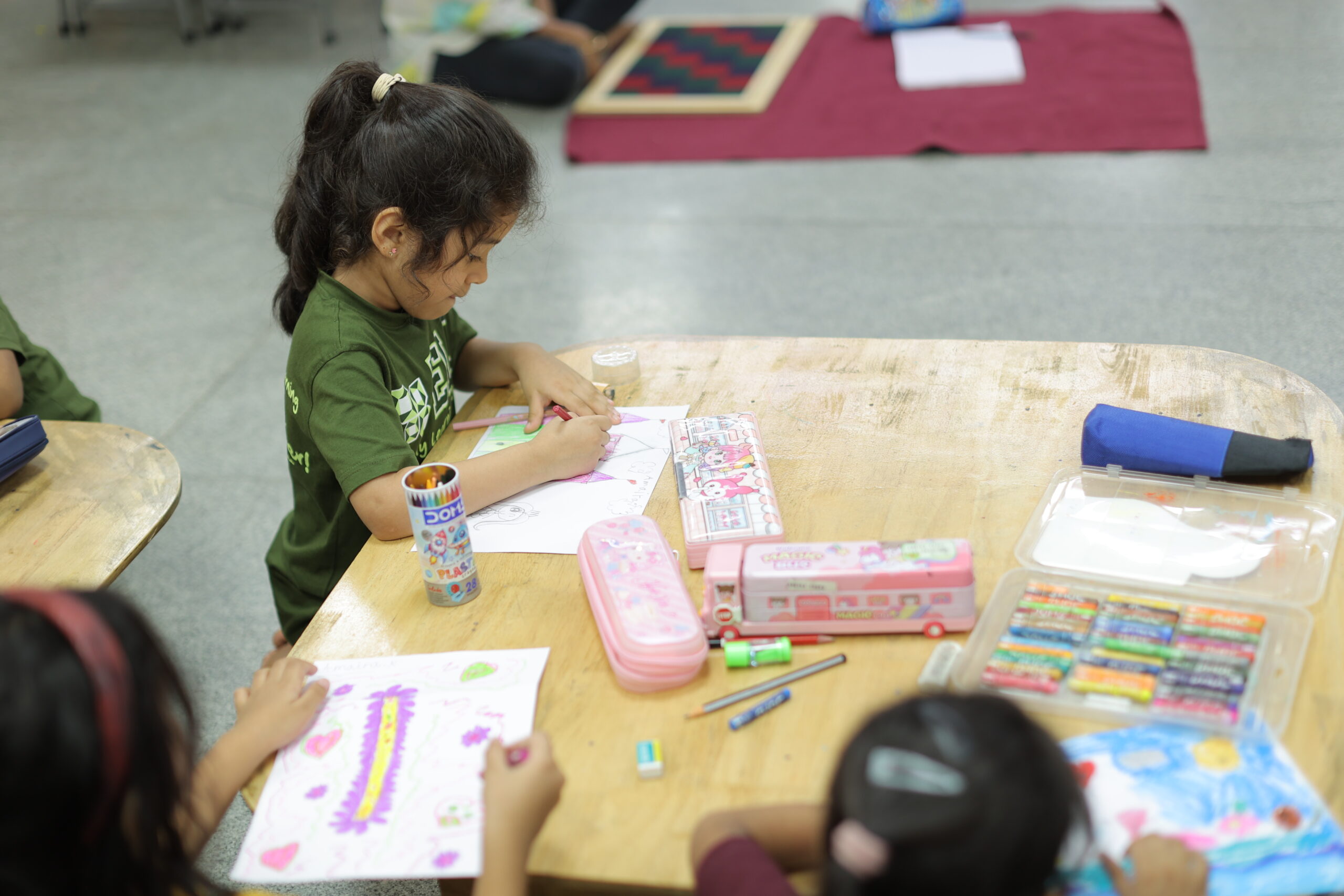
Grades 1 to 5 are deliberately not a race. The demand rises sharply from Grade 6, and a child who has spent five years being rushed arrives there tired instead of ready.
Reading, writing and number become comfortable rather than effortful. Children who arrive from very different preschools converge here.
Science becomes something you do rather than read. People who actually work in a field — researchers, naturalists, makers — come into classrooms, because a child who meets one is markedly clearer about what interests them.
The step up is real and it is announced rather than sprung. Olympiad pathways in mathematics and the sciences, the makerspace and computing open here, so a child who finds their subject has four years of momentum before any of it counts.
Our own teacher training centre runs Montessori and Reggio Emilia courses, and the primary teachers come through it. Professional development happens here rather than being chased in the holidays.
Scientists working on the city's tree database, on groundwater, on urban climate — on the same campus. A Grade 4 class can meet the people doing it, which almost no primary school in India can offer.
What we teach with is measured against whether it is actually helping these children. Where the evidence says a practice is not working, it changes. Your child is not the trial; the practice is.
By name, by the people teaching them, and by the people who decide things. That is a function of size, and it is one of the reasons we do not grow quickly.
To be stated precisely once confirmed — the school follows the Cambridge pathway through to IGCSE, with the Karnataka PU stream available in the senior years. The primary years lay the foundation for both.
Not an examination. There is a conversation and time spent with your child, which is as much for us to understand them as to assess anything. A six-year-old should not be preparing for an entrance test, and we do not ask them to.
No, and this is the most common worry. The first term is designed for a mixed intake precisely because most children arrive from conventional preschools. Independence is taught here, not assumed.
No. The path through to Grade 12 and beyond is available and many families take it, but each stage is entered by choice. Students also join at Grade 6 and at Grade 11.
Not in the primary years. The rigour arrives from Grade 6 and it is deliberate, but a school that pressures eight-year-olds usually has nothing else to offer them.
The best thing you can do is come while the school is running and see an ordinary day. Ask the teachers what you like; nobody is briefed for your visit.
Curriculum, fees and the admissions calendar are on cfalindia.com. If your child is younger, the Montessori years start at ELC, from age three.
office@cfalindia.com · +91 99005 20233